In this article
- 01Prompting before planning
- 02Spending too much time planning
- 03Trying to build everything at once
- 04Obsessing over design too soon
- 05Getting bogged down searching for the "perfect prompt"
- 06Not using the right tool mode
- 07Forgetting database security (RLS)
- 08Not launching the project on time
- 09Talking too much
The most common mistakes when building applications during a hackathon — especially when using AI — are often related to how participants interact with the model and structure their workflow. These aren't technical failures; they're habits. This is a practical list of the nine most common ones, designed to help you arrive better prepared for the next one.
Prompting before planning
The most common mistake isn't writing a bad prompt, but rather submitting commands too early, before clearly defining what you want to build. The platform's speed can trick participants into skipping the thinking stage, leading them to have to fix what a single, well-structured prompt could have achieved.
Spending too much time planning
On the other end: dedicating half the hackathon to documentation. Here, we're not looking for a complete, complex software product with extensive documentation. A functional product, even a minimal one, is what allows you to face reality: test, validate, and showcase. Without something on screen, there's no learning.
Trying to build everything at once
It's tempting to write a giant instruction describing every page, feature, and interaction all at once. But massive prompts overwhelm the model, which ends up guessing unspecified details. The result is a product that's halfway done in many aspects, requiring more time to fix than to move forward.
It's much more effective to build piece by piece, like Lego blocks.
Obsessing over design too soon
A common mistake is to start modifying colors, fonts, and shadows right after generating the initial structure. Since subsequent development phases — adding logic, databases, or forms — will change the layout, premature design work is often lost.
The main rule: first the skeleton, then the function, finally the polish.
Getting bogged down searching for the "perfect prompt"
Many participants are too cautious and delay deciding if their prompt is correct before submitting it. This slows them down considerably. The tool has a history as a safety net: if the result goes wrong, you can revert the project to the last functional version with a couple of clicks. Try, observe, adjust.
Not using the right tool mode
Using the wrong mode for a task is one of the main reasons why credits are unnecessarily depleted. It's good to be clear on all three:
- Plan mode to think and structure before building.
- Build mode to build.
- Visual Edit for small visual tweaks without spending tokens on major changes.
Forgetting database security (RLS)
Technically, it's very common to add login systems (authentication) but omit row-level security policies (Row-Level Security). Authentication without RLS is like having the front door locked but all interior rooms wide open: any user can view or delete other users' data.
Not launching the project on time
Trying to achieve perfection in a time-limited event, instead of publishing a functional version, is a common trap. An application that works — even if it has details to polish — impresses much more than a perfect design that never gets a live URL.
Talking too much
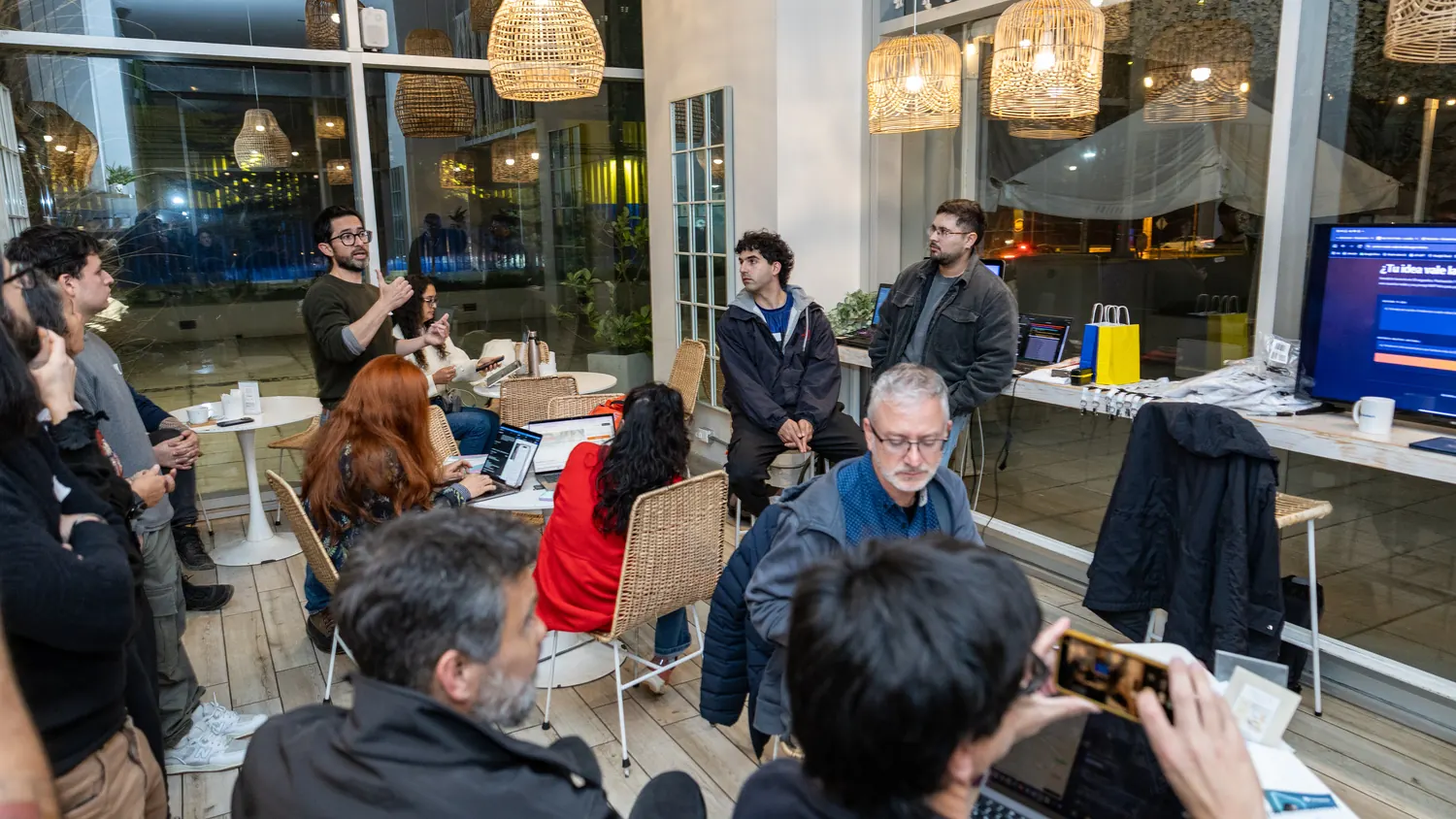
A 3 to 4-hour hackathon is much shorter than the traditional 54-hour one that starts on a Friday and ends on a Sunday. Therefore, beyond good vibes and sharing experiences, it's important for people to make progress to materialize their project. Conversation is valuable; code on screen is too.